

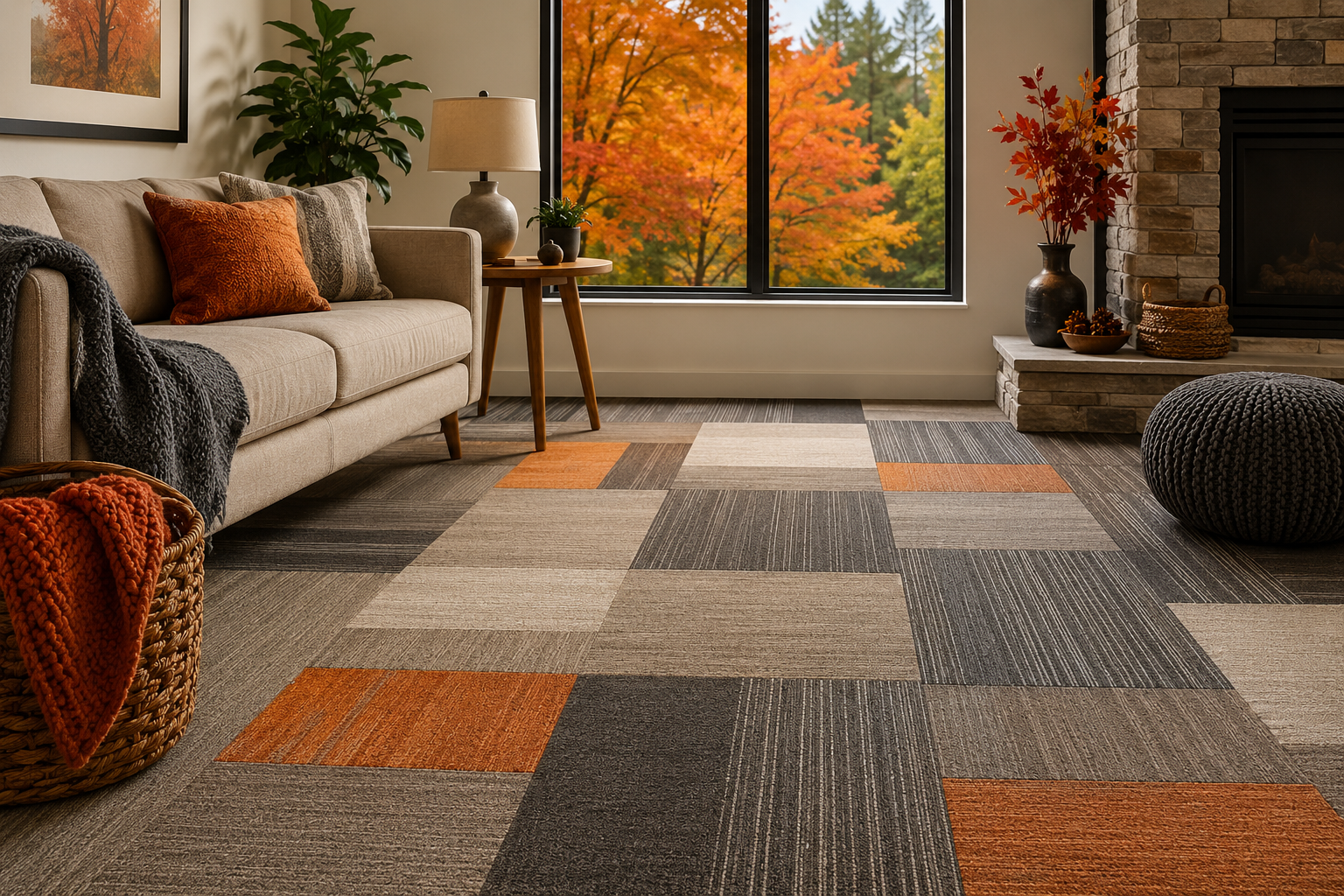
Late summer is a useful time to look around the house and ask a simple question: what would make the rooms you use every day feel fresher before fall?
For some Tigard homeowners, the answer may be a new paint color or updated furniture. For others, the floor is where the biggest visual change can happen. Carpet tile gives you an especially flexible way to rethink that surface because the modular format can create patterns, borders, zones, and subtle shifts in direction that traditional wall-to-wall carpet does not emphasize in the same way.
That flexibility feels particularly timely as summer winds down. Portland-area climate records document the region’s pronounced seasonal rainfall cycle, giving late-summer home updates a natural before-fall context.
With more than a century of local experience, Paulson's Floor Coverings helps Tigard-area homeowners compare flooring with design, traffic, maintenance, and long-term use in mind. Carpet tile is not limited to commercial spaces. Current residential modular carpet systems are designed for home use and allow layouts to be refreshed or reconfigured over time.
The key is choosing a layout that works with the room rather than forcing a pattern into it. Here are creative carpet tile ideas that can help freshen a Tigard home before fall.
Why Carpet Tile Works So Well for Pattern
Carpet tile starts with one big design advantage: repetition. Because the floor is built from individual modules, the same tile can be rotated, staggered, alternated, or paired with another color to change the overall look.
Manufacturers support several established installation methods. Interface's carpet tile installation guidance, for example, identifies monolithic, quarter-turn, ashlar, brick, and random layouts. Its current carpet tile catalog also includes herringbone among available installation methods. The important detail is that not every carpet tile is designed for every layout, so the manufacturer's installation direction always needs to guide the final choice.
That means creativity works best within the technical limits of the product you select.
Carpet tile can also make pattern feel approachable without relying on a highly printed floor. Tile direction, two closely related colors, or a darker perimeter can create enough visual interest on their own.
Before selecting a layout, look at the room's furniture, natural light, wall color, and existing woodwork. In many Tigard homes, the strongest floor design is the one that connects those elements instead of competing with them.
Pattern 1: Try a Softer Checkerboard
Checkerboard flooring has a long design history, but carpet tile gives it a softer, more relaxed character.
Instead of classic black and white, consider two related colors such as warm beige and taupe, charcoal and medium gray, cream and camel, or muted green and a natural neutral. Current residential carpet tile collections include checkerboard-inspired designs, showing that the pattern can work beyond hard tile surfaces.
Keep the Contrast Under Control
A strong contrast creates a graphic floor. A low contrast creates texture.
For a family room or home office, two shades that sit close together can make the pattern visible without dominating the room. This works especially well if you already have patterned upholstery, artwork, or prominent wood grain.
Use Checkerboard in a Defined Area
You do not always need to pattern the full room.
A checkerboard zone beneath a desk, reading area, game table, or seating group can act almost like a built-in rug. The modular format makes this type of floor zoning easier to visualize because the boundaries follow the tile grid.
For an open bonus room, that can help separate activities without adding walls or bulky dividers.
Pattern 2: Use Quarter-Turn Tiles for Quiet Texture
Quarter-turn installation is one of the easiest ways to create movement without mixing colors.
In this layout, adjacent tiles are rotated 90 degrees from one another. Interface also refers to this as a checkerboard installation method, although the result depends heavily on the carpet's texture and directional pile.
On a solid or nearly solid carpet tile, the change in direction catches light differently across the floor. That can create a subtle geometric rhythm even when every tile is technically the same color.
Where Quarter-Turn Works Best
This approach can be a strong fit for:
Home offices
Media rooms
Bedrooms
Upstairs bonus rooms
Craft or hobby spaces
The effect may be more noticeable on some textures than others, so review several tiles together rather than judging the layout from one sample. Ask to see how the pile changes when tiles are rotated under the room's actual lighting.
Pattern 3: Add Movement With Ashlar or Brick Layouts
If square-by-square repetition feels too rigid, staggered layouts can change the visual pace.
Interface's installation guidance distinguishes between ashlar and brick arrangements. In an ashlar layout, the tile bond is displaced by half a tile in one direction. In a brick layout, the displacement runs in the other direction relative to the tile orientation.
In plain language, both can create a staggered effect instead of lining every seam up in a perfect grid.
Why Staggering Changes the Room
Long sightlines can make a floor feel more expansive, especially when the carpet tile has a linear pattern.
An ashlar layout can emphasize one direction through a room, which may work well in a rectangular home office or bonus room. A brick layout can create a different sense of movement depending on the product orientation.
If you have a narrow room, consider how the lines lead the eye. Professional layout planning can account for sightlines, doorways, built-ins, and furniture before the pattern is set.
Pattern 4: Consider Herringbone for a More Designed Look
Herringbone brings stronger movement to the floor and can make carpet tile feel architectural.
The pattern is familiar from hardwood and tile, but rectangular carpet tiles can create a softer version of the same directional effect. Interface's current carpet tile assortment lists herringbone among its installation-method options, confirming that the layout is a genuine modular carpet choice when the specific tile supports it.
Let Herringbone Be the Main Pattern
If you choose this layout, keep nearby finishes more controlled.
Simple wall colors, solid upholstery, and restrained window treatments can give the floor enough space to make its statement. Natural wood furniture also pairs well because it adds warmth without introducing another competing geometric pattern.
For a Tigard home office, library, or bonus room, herringbone can make a practical space feel more finished.
When comparing carpet tile flooring, check which formats and collections are approved for herringbone or other directional installations before deciding on the pattern. The product's size, pile, backing, and installation requirements all affect what can be achieved.
Pattern 5: Build a Tonal Gradient Across the Room
A carpet tile pattern does not need obvious geometry at all.
Using several tones from the same color family can create a gradual shift from light to dark. This works particularly well with gray, brown, blue, green, or warm neutral palettes.
Create a Purposeful Direction
You might place lighter tiles near a window and move toward deeper tones in the interior of the room. Another option is to concentrate the darkest shade beneath a seating area or desk and let the floor become lighter toward the perimeter.
Keep the Palette Tight
Three tones are often enough.
Too many colors can make the layout feel random unless the product collection is specifically designed for a mixed installation. Staying within one color family gives you variation without sacrificing cohesion.
A tonal gradient can also connect furniture finishes without matching any one piece exactly.
Pattern 6: Use Borders and Insets to Define a Space
A border is one of the most practical carpet tile pattern ideas because it can make a simple floor look custom.
Start with a neutral field, then use a darker or contrasting tile around the perimeter. The border can be one tile wide for a stronger frame or narrower if the product format and installation plan allow.
Create a Carpet Tile "Area Rug"
Another option is to reverse the idea.
Use one color or pattern in the center of the room and a quieter tile around it. This can create the visual effect of an area rug while keeping the surface modular.
That approach works especially well beneath:
A dining or game table
A desk
A sectional
A reading chair
A children's play area
The inset can help furniture placement feel more intentional.
Pay Attention to Room Shape
Borders reveal irregular walls quickly. If a room has angled corners, built-ins, or an off-center fireplace, the pattern needs to account for those features.
A professional layout can determine whether the border should follow the room itself or create a more regular visual rectangle within it.
Pattern 7: Mix Texture Instead of Color
If you prefer a nearly monochromatic palette, texture can do the design work.
Pairing carpet tiles with different loop heights, linear details, or subtle surface patterns can create variation without introducing multiple colors. Interface's current carpet tile catalog categorizes designs as geometric, linear, organic, solid, stone-inspired, textured, and woven, which shows how much visual range is possible within the category.
Let Light Bring Out the Pattern
As daylight changes through the year, textured floors can look different from morning to evening. Raised loops and directional surfaces catch light and shadow in ways a flat, uniform floor may not.
That can make the room feel layered while keeping the color scheme calm.
Use restraint here. If two tiles have noticeably different pile heights or constructions, make sure they are intended to work together and can be installed as part of the same floor system.
Choose the Pattern Based on the Room, Not Just the Sample
A pattern that looks great in a small display can feel very different across an entire room.
Before finalizing the design, consider four practical questions.
How Large Is the Room?
Large-scale patterns need enough floor area to repeat properly. In a compact bedroom, a quieter quarter-turn or tonal layout may read more clearly than a complex multi-color design.
How Much Furniture Will Cover the Floor?
Do not spend all your design energy on a pattern that disappears beneath a sectional, bed, and storage units.
Map out the visible floor first. Sometimes the most effective patterned zone is exactly where furniture does not sit.
Where Does the Eye Enter the Room?
Stand at the doorway.
That first sightline often determines whether a staggered or directional pattern feels balanced. Also check the view from connected hallways or adjacent open spaces.
How Busy Are the Other Finishes?
Patterned curtains, expressive wallpaper, colorful upholstery, and strong wood grain already bring visual movement.
If several of those elements are staying, a quieter carpet tile pattern can support them. If the room is minimal, the floor has more freedom to become the feature.
The Modular Format Can Be Practical for Busy Homes
Design flexibility is only part of carpet tile's appeal.
One practical advantage of a modular floor is that an individual tile may be removable or replaceable if it becomes badly stained or damaged, depending on the product and installation system. FLOR's current residential guidance, for example, explains how individual tiles in its system can be removed and replaced rather than replacing an entire rug or floor section.
Routine care still matters. Frequent vacuuming in high-traffic areas and prompt attention to spills help maintain appearance. Always follow the care instructions for the specific carpet tile you purchase because fiber type and backing system can affect cleaning recommendations.
For fall, think about traffic patterns as well. If wet shoes enter through one doorway, a proper walk-off mat on a suitable hard-surface entry can help keep moisture and soil from traveling toward carpeted areas.
Carpet tile is not automatically the right choice for spaces with ongoing moisture exposure. Product specifications and room conditions need to be considered before installation.
Freshen the Floor Without Making the Room Feel Overdone
The best carpet tile pattern is not necessarily the most complicated one.
A Tigard family room may only need two warm neutral colors in a soft checkerboard. A home office might come alive with a herringbone layout. A bonus room could benefit from a darker inset that visually organizes a game or seating area. A bedroom may need nothing more than quarter-turned tiles that create gentle texture as the light changes.
Start with the mood you want.
If the room needs calm, look at tonal layouts and subtle directional changes. If it needs energy, consider herringbone, checkerboard, or a defined inset. If you want the floor to connect several existing finishes, build the palette around colors already present in the furniture, walls, and woodwork.
Then test more than one tile at a time. Pattern only becomes meaningful when you can see repetition.
A late-summer flooring update can also be a practical reset before busier indoor routines return. Instead of changing several parts of a room, a thoughtfully planned carpet tile floor can bring color, softness, structure, and personality into one surface.
If you are considering a carpet tile refresh for your Tigard home and want help comparing colors, textures, and installation patterns, get in touch with the Paulson's team for knowledgeable, personalized guidance.


