

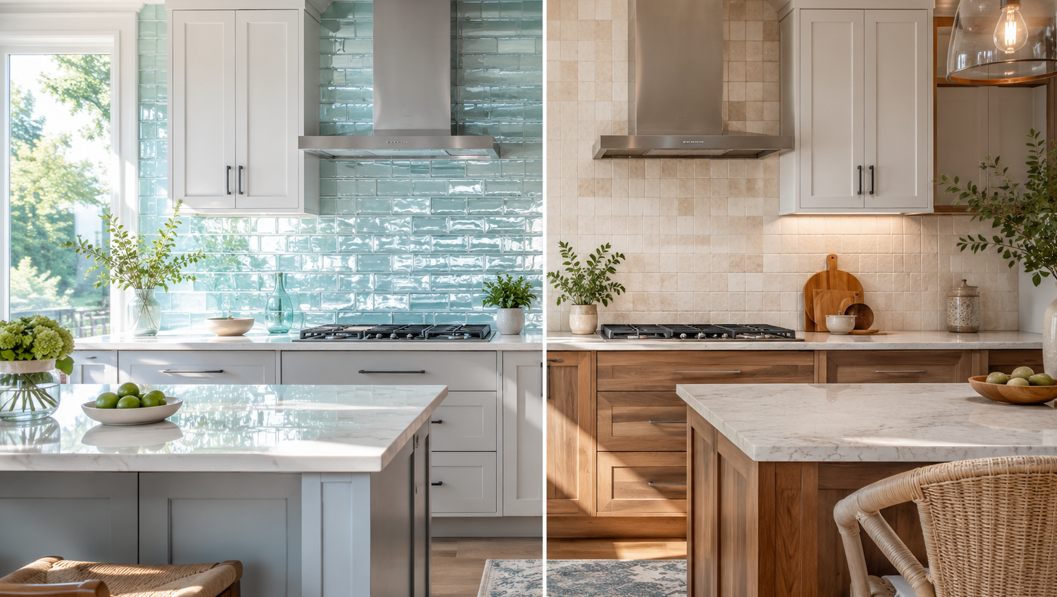
A Cooler-Feeling Kitchen Starts With the Right Expectations
On a warm Tigard afternoon, the kitchen can become one of the hottest rooms in the house. Sunlight streams through the windows, the oven adds heat, and people move between the refrigerator, sink, and cooktop. When planning a summer kitchen update, it is natural to wonder whether a backsplash or tile surface can help the room feel cooler.
Glass and ceramic tile can influence how a kitchen looks, reflects light, and feels to the touch. They can also support a bright, clean design that feels visually refreshing during summer. What they cannot do is replace ventilation, shading, efficient appliances, or a properly operating cooling system.
That distinction matters. A pale glass backsplash may make the room appear lighter and more open, while a matte ceramic surface may reduce glare and create a calm, grounded atmosphere. Neither material automatically lowers the air temperature simply because it looks cool or feels cool under your hand.
Family-owned for more than 100 years, Paulson’s Floor Coverings helps homeowners throughout the Portland Metro and Vancouver area compare materials based on real household needs. For Tigard kitchens, that means considering summer sunlight, cooking habits, cleaning preferences, room size, cabinet colors, and where the tile will be installed.
This guide compares glass and ceramic tile without promising an instant cooling effect. It explains how each material handles light, heat exposure, maintenance, and design so you can create a kitchen that feels brighter, more comfortable, and better suited to summer living.
What Tile Can and Cannot Do for Kitchen Cooling
Before comparing materials, it helps to separate actual temperature control from perceived comfort.
Tile Can Affect How a Room Feels
Hard tile surfaces can feel cooler to the touch than softer, more insulating materials, especially when they have not been warmed by direct sunlight or cooking equipment.
Color and reflectivity also influence perception. Light surfaces may make a kitchen look brighter, while blue, green, white, and soft gray tones often create a visual association with coolness. Reflective glass can spread light, and low-sheen ceramic can soften intense sunlight.
These effects are real from a design and comfort perspective, but they are not the same as lowering indoor air temperature.
Tile Is Not a Cooling System
A backsplash covers only part of the kitchen, so its impact on room temperature is limited. Flooring covers more surface area, but the result still depends on sunlight, insulation, ventilation, subfloor conditions, and the temperature of the surrounding room.
As a practical conclusion, selecting glass or ceramic tile should be treated as a design and performance decision rather than a substitute for shading, ventilation, or air conditioning. The U.S. Department of Energy identifies controlled daylight, shading, efficient equipment, building design, and HVAC as meaningful parts of indoor cooling and energy performance.
For a more comfortable summer kitchen, combine the right tile with:
Window shades or blinds that reduce direct afternoon sun
Effective range-hood ventilation
LED lighting that produces less heat than older bulbs
Thoughtful oven and appliance use on very warm days
A properly maintained cooling system
Air movement from ceiling or portable fans where appropriate
Tile can support the plan, but the broader room strategy does the real cooling work.
Glass Tile and Ceramic Tile at a Glance
Both materials can create a beautiful kitchen, but they produce different visual effects and have different installation needs.
Glass Tile
Glass tile is valued for clarity, depth, color, and light reflection. Depending on the product, it may be transparent, translucent, frosted, iridescent, textured, or fully opaque. It is commonly used for backsplashes, borders, niches, and decorative accents.
Glass can create a light, fresh appearance because it interacts with both natural and artificial light. It may be especially appealing in a smaller kitchen or a room with darker cabinets that needs a brighter focal point.
The installation requires careful material selection. Glass products can vary in thickness, backing, mounting, transparency, and approved applications. Specialized setting materials and proper substrate preparation may be needed, which is why glass tile has unique specification and installation requirements.
Ceramic Tile
Ceramic tile offers broad flexibility in color, shape, texture, pattern, and finish. It can imitate handmade clay, stone, concrete, fabric, or classic subway tile. Some products are intended for walls, while floor-rated options are designed for foot traffic.
Ceramic is widely used in kitchens because it creates a durable, cleanable surface around water, food preparation, and cooking areas. Properly installed ceramic backsplashes can protect walls from splashes and cooking residue, and ceramic tile is valued for water, stain, and flame resistance in kitchen applications.
Ceramic may feel more grounded and less reflective than glass, although glossy ceramic can still bounce plenty of light. The final effect depends on glaze, color, tile size, grout, and layout.
How Glass Tile Creates a Brighter Summer Look
Glass tile does not actively cool the room, but it can make a kitchen feel lighter and more visually refreshing.
Reflecting Natural Light
A glossy or translucent glass backsplash can reflect daylight across the wall, helping a smaller or darker kitchen feel less enclosed.
A west-facing Tigard kitchen may receive strong afternoon sun, which can create glare on highly reflective tile. Homeowners who want a softer effect can consider frosted, textured, satin, or smaller mosaic formats.
Supporting Cool Color Palettes
Glass tile is available in watery blues, soft greens, icy whites, pale grays, and mixed mosaics that visually suggest a cooler atmosphere. These colors can balance warm wood cabinets, bronze hardware, or reddish flooring.
A cool-looking palette does not have to feel stark. Pairing pale glass with natural wood, warm white paint, or brushed metal can keep the room welcoming.
Adding Depth Without Visual Weight
Because glass can transmit or reflect light, it often has more visual depth than a painted surface. A stacked pattern, slim rectangle, or small mosaic can add detail without making a compact kitchen feel heavy.
Managing Glare and Reflections
More reflection is not always better. Glass near a large window or bright under-cabinet lighting can produce intense highlights, while fingerprints and water spots may show on some glossy surfaces.
View a sample in morning and afternoon light, under the planned lighting, and beside the cabinets and countertops. This helps you judge whether the reflection feels lively or distracting.
How Ceramic Tile Creates Balanced Comfort
Ceramic tile can support a cooler-feeling kitchen through color, finish, and visual calm rather than glass-like sparkle.
Softening Strong Light
Matte and satin ceramic finishes can reduce the sharp reflections that sometimes occur in sun-filled kitchens. This may be helpful in rooms with large windows, glossy countertops, stainless steel appliances, or bright task lighting.
Instead of bouncing light in multiple directions, a low-sheen ceramic surface can create a more even visual backdrop. The room may feel calmer during the brightest part of the day.
Offering More Surface Textures
Ceramic tile can be smooth, rippled, handmade-looking, embossed, fluted, or stone-inspired. Texture adds interest without relying on high gloss. It can also create gentle shadow lines that change as daylight moves through the kitchen.
Deep textures need more cleaning attention around the cooktop, so the most dramatic options may work better on less exposed walls or as limited accents.
Working Across Floors and Walls
Ceramic products are available for many applications, including backsplashes and floors, although each tile must be rated for its intended use. A coordinated ceramic floor and backsplash can create continuity without using the exact same tile everywhere.
A lighter floor can help the room look open, but practical maintenance matters. Mid-tone colors and subtle patterns may disguise everyday crumbs, pet hair, and soil more effectively than a completely white surface.
Handling Cooking Areas
Ceramic is often selected around ranges because properly installed tile provides a cleanable, heat-tolerant wall finish. Product suitability, required clearances, the cooking appliance manufacturer’s instructions, and the complete installation system still need to be reviewed.
The tile is only one component. Mortar, grout, backer material, movement joints, and wall preparation all contribute to performance.
Where Each Material Works Best
The best choice may depend less on which tile is “cooler” and more on where it will be used.
Behind the Sink
Both glass and ceramic can work well as a sink backsplash when the chosen product and installation system are approved for the application.
Glass offers brightness and color depth. Ceramic offers a wide range of textures and styles. In either case, grout selection and joint width affect cleaning.
Behind the Cooktop
Ceramic is a familiar choice near cooking areas because of its practical kitchen performance. Glass may also be suitable, but the exact tile, backing, setting material, and appliance clearances need careful review.
Some decorative glass products have special limitations, particularly when they include coatings, mesh, metallic backing, or heat-sensitive decorative layers. Do not assume that every glass mosaic is suitable behind every range.
On the Kitchen Floor
Ceramic tile may be used on kitchen floors when it has the correct floor rating and slip characteristics. Glass tile is not automatically floor-rated. Some specialty glass mosaics are approved for limited floor applications, while many are intended only for walls.
When comparing mosaic formats and approved uses, Tigard homeowners can review available glass tile flooring and wall-tile options, then confirm the manufacturer’s application rating before making a final selection.
As an Accent
Glass excels as a decorative accent. A narrow stripe, framed section, niche, or small mosaic field can add light without covering the entire wall.
Ceramic can provide the main field tile, with glass used selectively for contrast. This approach may balance budget, maintenance, and visual impact while avoiding an overly reflective kitchen.
Color, Sheen, Grout, and Layout Matter More Than the Label
A glass tile is not automatically cool-looking, and a ceramic tile is not automatically warm-looking. Design choices shape the result.
Choose Color for the Room’s Light
In a shaded kitchen, pale glass or glossy ceramic can help distribute available light. In strong afternoon sun, matte ceramic or frosted glass may feel more comfortable.
Blue, green, gray, and crisp white can suggest coolness, but undertones matter. Compare them directly with the cabinets and countertops before deciding.
Use Grout to Control Contrast
Grout can make a pattern quiet or prominent.
Matching grout creates a smoother, more continuous surface.
Contrasting grout outlines each tile and emphasizes geometry.
Mid-tone grout may be more forgiving around cooking and food-preparation areas.
The grout type and maintenance requirements need to suit the tile and application.
Transparent and translucent glass may reveal shadows or inconsistencies behind the tile, making installation materials and coverage especially important.
Consider Tile Size
Large tiles create fewer grout lines and a cleaner visual field. Small mosaics add movement, texture, and color variation.
In a compact kitchen, a small mosaic may feel busy across every wall. A focused accent can create a stronger result. Larger formats can feel streamlined, but the wall needs to be sufficiently flat.
Let the Layout Support the Mood
Stacked layouts can feel clean and modern. Running-bond patterns offer a familiar look. Herringbone, chevron, vertical stacks, and geometric mosaics add energy.
For a relaxed summer feel, keep one element dominant. Strong color variation often works best with a simpler layout.
Installation and Maintenance Can Change the Experience
A beautiful sample is only the starting point. Installation quality and everyday care affect how the finished kitchen performs.
Glass Requires Careful Preparation
Glass can reveal the setting material beneath it, particularly when the tile is transparent or translucent. Uneven coverage, inappropriate mortar color, or trowel marks may affect the final appearance.
Cut edges can also be noticeable, so outlet placement, corners, trim, and transitions need planning. The installer should follow the tile and setting-material manufacturers’ instructions.
Ceramic Offers Variety, Not One Standard Formula
Ceramic products vary in body type, glaze, thickness, edge shape, and application rating. Handmade-look tiles may include intentional variation, while precision products may create straighter joints.
Homeowners should review several pieces rather than judging the collection from a single tile. Variation can be part of the design.
Cleaning Depends on Finish and Grout
Glossy glass and ceramic surfaces are generally straightforward to wipe, but they may show splatter and streaks. Textured tile can conceal marks yet require more detailed cleaning.
Grout often needs the most attention. Choosing the right grout color, joint size, and product can make maintenance feel more manageable.
Avoid abrasive tools or cleaners that are not approved for the tile, finish, or grout. Following the manufacturer’s instructions helps protect the completed installation.
Which Tile Fits Your Tigard Kitchen?
Choose glass tile when you want:
Light reflection and visual depth
A bright focal point
Translucent, iridescent, or jewel-like color
A decorative backsplash or accent
A crisp look that pairs well with simple cabinetry
Choose ceramic tile when you want:
Broad style and texture options
Matte, satin, or glossy finishes
A traditional, handmade, or stone-inspired appearance
Coordinated floor and wall possibilities
A durable, practical backsplash surface
Consider combining them when you want the calm foundation of ceramic with the sparkle of glass. A ceramic field tile with a limited glass accent can create a balanced kitchen that feels fresh without becoming visually busy.
The decision should account for:
Direct sunlight and glare
Cabinet and countertop undertones
Cleaning habits
Cooktop and sink placement
Floor or wall application ratings
Grout preferences
Installation requirements
The amount of pattern already in the room
Create a Kitchen That Feels Fresh All Summer
Glass and ceramic tile can both support a comfortable, summer-ready Tigard kitchen, but they do so in different ways. Glass reflects light, adds depth, and brings cool-toned color to the room. Ceramic offers flexible textures, softer finishes, and practical options for both walls and properly rated floors.
Neither material serves as air conditioning. The tile’s contribution is mainly visual, tactile, and functional. For meaningful temperature control, combine thoughtful surface choices with shading, ventilation, efficient lighting, and sensible appliance use.
The strongest design is not necessarily the glossiest or palest option. It is the one that works with the room’s light, cooking habits, existing finishes, and maintenance needs. Samples viewed inside the kitchen can help you understand how each material changes from morning to evening.
Paulson’s Floor Coverings can help you compare glass and ceramic products, understand approved applications, coordinate colors, and plan a professional installation. To explore options for your Tigard kitchen, get in touch with our knowledgeable team.


