

Start with a Kitchen That Feels Pulled Together
Planning a kitchen remodel is exciting—but it can also feel overwhelming when you’re trying to make everything work together. One of the biggest design challenges homeowners face is figuring out how to match countertops with a tile backsplash in a way that feels cohesive, stylish, and timeless.
These two elements do more than just serve a purpose. They define the entire personality of your kitchen. The countertop is where daily life happens—meal prep, family gatherings, morning routines—while the backsplash frames the space visually and protects your walls. When they’re paired well, the result is a kitchen that feels intentional and beautifully finished.
In Vancouver, WA, homeowners are increasingly looking for kitchens that strike the perfect balance between design and practicality. Whether you're updating a family home or preparing a property for resale, the right combination can elevate the entire space.
At Paulson’s Floor Coverings, homeowners have access to a wide selection of surfaces and expert guidance to help bring their vision to life. With over a century of experience, the focus is always on making the process feel smooth, personalized, and rewarding.
This guide breaks everything down into simple, practical steps so you can confidently choose a pairing that works for your home and your lifestyle.
Why Countertops and Backsplashes Should Be Designed Together
It’s easy to think of countertops and backsplashes as separate decisions—but they’re visually connected in a way that makes them function as a single design element.
Countertops run horizontally across your kitchen, while backsplashes create a vertical backdrop. Together, they form one continuous visual flow. When they’re not aligned, the space can feel disjointed. But when they complement each other, everything looks polished and intentional.
Designing them together helps create:
A balanced, cohesive look that feels professionally designed
A kitchen that’s easier to style with cabinets, flooring, and décor
Greater long-term appeal, especially if you’re thinking about resale
One of the most important ideas to understand is the balance between coordination and contrast. You don’t want everything to match perfectly—that can feel flat. At the same time, too much contrast can feel chaotic. The goal is to create harmony while still adding personality.
When homeowners take the time to think about both elements together, they often end up with a kitchen that feels more refined and easier to live with day-to-day.
Step 1: Start with Your Countertop as the Foundation
When you’re building your kitchen design, the countertop is usually the best place to start. It covers the largest surface area, plays a central role in daily use, and often sets the tone for the entire space.
There are a few popular directions homeowners tend to go:
Light, clean surfaces that brighten the space
Dark, bold finishes that create contrast
Veined designs that add movement and visual interest
Each option influences what will work best for your backsplash. For example, a countertop with a lot of pattern or veining already draws attention. Pairing it with a busy backsplash can feel overwhelming. On the other hand, a simple countertop gives you more flexibility to experiment with texture or pattern on the wall.
It’s also important to think about how you live in your kitchen. Families who cook often might prefer surfaces that are easy to clean and maintain, while others may prioritize a specific look or feel.
By choosing your countertop first, you create a clear foundation that makes every other design decision easier.
Step 2: Choose a Backsplash That Complements, Not Competes
Once your countertop is selected, the backsplash becomes your opportunity to enhance the design without overpowering it.
The key is to think in terms of balance:
If your countertop is bold or patterned, go for a simpler backsplash
If your countertop is subtle, you can introduce more texture or pattern on the wall
Backsplashes come in a wide range of styles—from classic subway tiles to textured or geometric designs. The finish also matters. Glossy tiles reflect light and can make a space feel brighter, while matte finishes offer a softer, more understated look.
Grout color plays a role too. Matching grout creates a seamless effect, while contrasting grout highlights the tile pattern.
The goal isn’t to make the backsplash disappear—it’s to let it support the overall look. When done right, it enhances the countertop and ties the entire kitchen together.
Step 3: Match Undertones for a Seamless Look
One of the most overlooked details in kitchen design is undertone. Even when colors look similar at first glance, they can have subtle warm or cool tones that affect how they work together.
Warm tones include shades with hints of yellow, beige, or cream. Cool tones lean toward grey, blue, or crisp white. Mixing these without intention can create a look that feels slightly “off,” even if you can’t immediately tell why.
To avoid this, it helps to:
Compare samples side by side in natural light
Look at your cabinets and flooring at the same time
Notice whether the colors feel warm, cool, or neutral
In many Vancouver, WA homes, popular combinations include warm wood cabinetry paired with soft, creamy surfaces, or cooler grey palettes matched with clean white tiles.
Getting the undertones right creates a sense of flow that makes the entire kitchen feel more cohesive.
Step 4: Consider Lifestyle and Maintenance Needs
Design is important—but so is how your kitchen performs every day.
Busy households often benefit from surfaces that are easy to maintain and stand up to regular use. Spills, splashes, and everyday wear are part of life, so choosing materials that handle them well can make a big difference.
This is where durable and low-maintenance countertops really shine. Many homeowners appreciate options that resist stains, clean easily, and maintain their appearance over time. If you’re exploring different materials, you can browse a wide range of countertops designed to balance beauty with everyday practicality.
Backsplashes also play a role in maintenance. Smooth surfaces are easier to wipe down, while highly textured tiles may require a bit more attention.
Thinking about how you use your kitchen helps ensure your design choices feel just as good years from now as they do on day one.
Step 5: Use Contrast to Add Personality (Without Overdoing It)
Contrast is one of the most effective ways to add character to your kitchen—but it works best when used thoughtfully.
A few popular approaches include:
Light countertops paired with darker backsplashes for a bold, modern look
Neutral surfaces combined with textured or patterned tiles for added depth
Subtle contrast within the same color family for a softer, layered feel
The key is restraint. Too much contrast can make the space feel busy, while too little can feel flat. A well-balanced combination gives your kitchen personality without overwhelming the design.
It’s also helpful to think about the overall style you’re aiming for. Modern kitchens often lean toward clean lines and subtle contrast, while more traditional spaces may incorporate warmer tones and classic patterns.
When used correctly, contrast adds visual interest and helps your kitchen feel unique to your home.
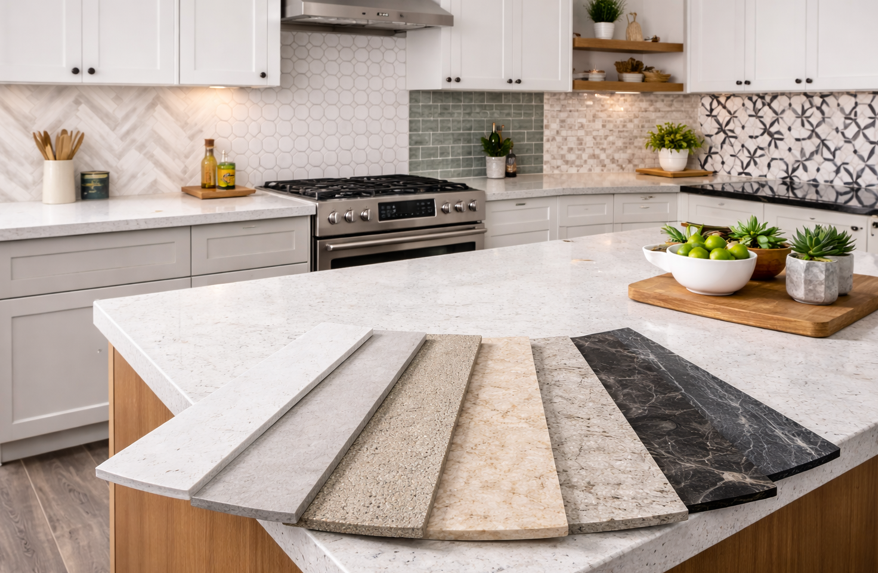
Step 6: Test Samples Before Making a Final Decision
Even the best design ideas can look different once they’re in your home. Lighting, surrounding colors, and room layout all affect how materials appear.
That’s why testing samples is such an important step.
Bringing samples into your kitchen allows you to:
See how colors look in natural and artificial light
Compare materials alongside cabinets and flooring
Get a true sense of how everything works together
What looks perfect in a showroom might feel different in your space. Taking the time to test ensures you feel confident in your final decision.
Small steps like this can make a big difference in achieving a result you’ll love long-term.
Design Ideas Vancouver, WA Homeowners Are Loving Right Now
Kitchen design continues to evolve, but many homeowners are gravitating toward looks that feel both modern and timeless.
Some popular directions include:
Clean white kitchens with subtle texture for added depth
Natural-inspired surfaces paired with simple, understated backsplashes
Soft neutral palettes that create a calm, welcoming environment
Matte finishes that offer a more refined, contemporary feel
These styles work well because they balance visual appeal with everyday livability. They also adapt easily as trends change, making them a smart long-term choice.
Rather than chasing trends, many homeowners are focusing on combinations that feel comfortable, functional, and aligned with their personal style.
Bring Your Kitchen Vision to Life with Confidence
Matching countertops with a tile backsplash doesn’t have to feel complicated. When you break it down into simple steps—starting with your countertop, balancing contrast, matching undertones, and thinking about your lifestyle—it becomes much easier to create a space that feels just right.
The goal isn’t perfection. It’s creating a kitchen that works for you, looks beautiful, and feels like a natural extension of your home.
If you’re ready to take the next step or want expert guidance tailored to your space, don’t hesitate to reach out to us. A knowledgeable team can help you explore options, compare materials, and bring your vision together with confidence.


