

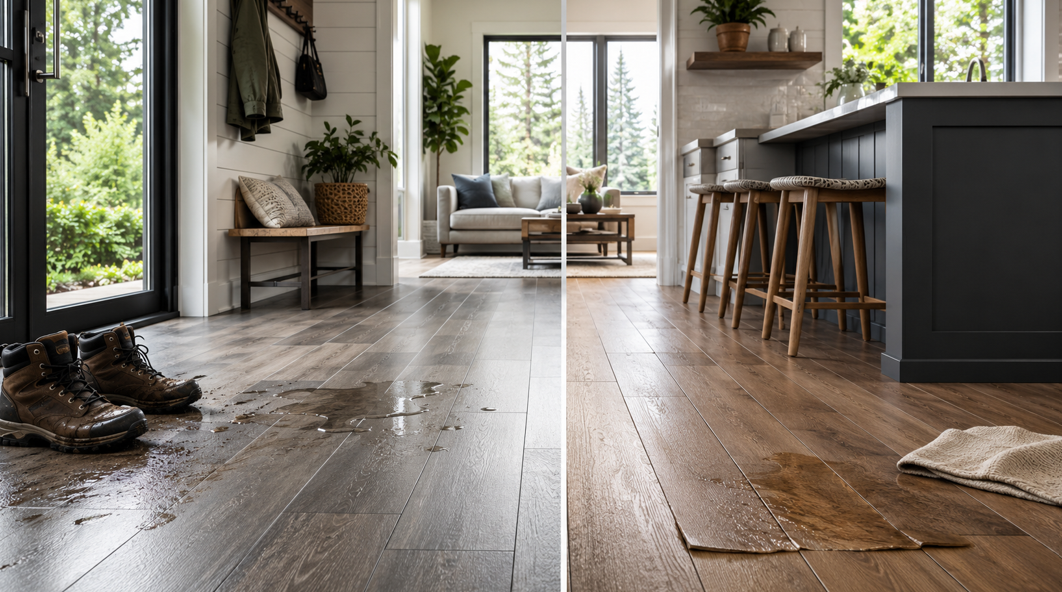
Why the Difference Matters in Beaverton Homes
A spilled drink, a wet dog, muddy shoes, or a leaking appliance can put a floor to the test quickly. In Beaverton homes, moisture can show up in entryways, kitchens, bathrooms, laundry rooms, basements, and busy family spaces. Summer can bring its own messes too, from garden soil and sprinkler water to pool towels and pets moving in and out of the house.
That is why flooring labels such as “waterproof” and “water-resistant” deserve more than a quick glance. They may sound similar, but they do not always describe the same level of protection. Choosing between them depends on the room, the type of moisture involved, the flooring construction, and the manufacturer’s care and installation requirements.
Family-owned for more than 100 years, Paulson’s Floor Coverings helps homeowners throughout the Portland Metro and Vancouver area compare flooring options with practical, personalized guidance. For Beaverton households, that can mean looking beyond appearance and asking how a product will perform around pets, children, cooking, laundry, outdoor traffic, and everyday spills.
This guide explains the general difference between waterproof and water-resistant flooring, where each may work well, what the labels do not guarantee, and which questions to ask before buying. Because product definitions and warranties vary, the final decision should always be based on the specific flooring line rather than the category name alone.
Waterproof and Water-Resistant Are Not Interchangeable Terms
The simplest distinction is that water-resistant flooring is designed to slow or limit moisture penetration for a certain period, while waterproof flooring is generally built to prevent water from damaging the flooring material itself under the conditions described by the manufacturer.
That distinction is useful, but it is not the whole story.
What Water-Resistant Usually Means
Water-resistant flooring can handle limited moisture exposure better than a product with no moisture protection. It may give homeowners time to wipe up a spill before liquid reaches vulnerable layers or causes visible changes.
The actual level of resistance depends on factors such as:
The surface coating
The density and composition of the core
The locking system
The quality of the installation
The length of exposure
Whether water reaches seams, edges, or the subfloor
A water-resistant product may work well in a living room, bedroom, home office, or dining area where spills are occasional and usually cleaned up promptly.
What Waterproof Usually Means
Waterproof flooring is generally designed so the flooring material does not absorb water or lose its basic integrity when exposed according to the product’s stated testing and warranty conditions. Many waterproof luxury vinyl products, for example, use synthetic cores that do not swell in the same way as moisture-sensitive wood-based materials.
However, “waterproof flooring” does not automatically mean the entire installed room is waterproof. Water may still move through perimeter gaps, around plumbing penetrations, beneath cabinets, or through damaged seams. It can reach the subfloor or nearby building materials even when the planks themselves remain unaffected.
Why the Product Warranty Matters
Manufacturers may define moisture protection differently. One product may cover ordinary household spills, while another may include longer exposure under specific conditions. Some warranties exclude flooding, plumbing failures, standing water, improper installation, or moisture coming from beneath the floor.
A helpful rule is simple: treat the warranty and installation guide as the final definition of the product’s water protection.
Where Water-Resistant Flooring Can Be a Smart Choice
Water-resistant flooring is not a lesser option by default. In the right room, it can provide a practical balance of appearance, performance, and value.
Living Rooms and Bedrooms
These rooms usually face lower moisture risk than bathrooms, laundry areas, or mudrooms. A water-resistant floor may be suitable when the household cleans spills promptly and does not expect frequent wet traffic.
Homeowners may choose water-resistant laminate or engineered products because they like the visual detail, texture, warmth, or construction. The key is matching the material to realistic use.
Dining Rooms and Home Offices
Dining spaces may experience drink spills or food messes, but prolonged standing water is less common in many homes. A quality water-resistant product can provide useful protection when spills are noticed quickly.
In a home office, the main concerns may be rolling chairs, sunlight, foot traffic, and occasional drinks rather than regular water exposure. Moisture protection is still helpful, but full waterproof performance may not be the deciding factor.
Low-Risk Hallways
Interior hallways that do not connect directly to an exterior door may also suit water-resistant flooring. The decision depends on how the household moves through the home. A hallway used by children, pets, or people coming in from the yard may experience more moisture than its location suggests.
Households With Reliable Cleanup Habits
Water-resistant floors often perform best when spills are cleaned quickly and the household follows the manufacturer’s care guidance. If water is likely to sit unnoticed, a waterproof product may provide greater peace of mind.
Where Waterproof Flooring May Offer Better Protection
Waterproof flooring is often considered for areas where moisture is more frequent, less predictable, or harder to control.
Entryways and Mudrooms
Beaverton entryways can collect damp shoes, pet prints, yard debris, and wet outerwear. Even during drier summer weather, gardening, irrigation, outdoor play, and trips to nearby parks can bring moisture inside.
A waterproof floor can be a practical choice in these transition spaces because cleanup needs to be simple and repeated exposure is more likely.
Kitchens
Kitchens face splashes, dropped ice, dishwasher leaks, pet bowls, cooking spills, and regular cleaning. Waterproof flooring may provide useful protection where minor moisture is part of daily life.
That does not remove the need to address leaks quickly. Water can still move beneath the floor or damage cabinets and subflooring.
Laundry Rooms
Washing machines, utility sinks, and wet clothing make laundry rooms a higher-risk area. Waterproof flooring can help protect the finished surface from ordinary splashes and drips.
A serious hose failure or overflow is different from a routine spill. Homeowners should not assume that a waterproof floor replaces leak detection, appliance maintenance, or professional water-damage response.
Bathrooms and Powder Rooms
Bathrooms frequently experience wet feet, drips, and splashes. Some waterproof flooring products are approved for bathroom use, while others may have restrictions relating to full bathrooms, perimeter sealing, or installation around fixtures.
The product instructions should confirm whether the floor is suitable for the exact bathroom and installation method.
Basements and Lower-Level Rooms
Below-grade spaces may have moisture concerns from the concrete slab, indoor humidity, or past water events. Waterproof flooring can be useful, but it does not correct moisture entering from below.
The subfloor or slab may require testing and preparation before installation. If there is an active moisture problem, that issue needs to be addressed first.
How Flooring Construction Changes Moisture Performance
Two floors can look similar while reacting very differently to water. The internal construction matters just as much as the surface design.
Waterproof Luxury Vinyl
Many waterproof luxury vinyl floors use a synthetic core that does not absorb water in the same way as wood fiber. They are often selected for kitchens, entryways, laundry spaces, and active family rooms because they combine practical maintenance with a broad range of wood- and stone-inspired looks.
Homeowners comparing these products can explore available waterproof flooring options and then review the specifications for the individual collections that suit their rooms.
Water-Resistant Laminate
Modern laminate can provide stronger moisture resistance than many older products. Its protective surface and improved locking systems may slow water penetration, while detailed visuals can create a realistic wood appearance.
The core is still an important consideration. If moisture reaches a wood-based core and remains there, swelling or edge damage may occur. Some laminate collections offer more extensive water protection than others, so the product label alone is not enough.
Engineered Hardwood
Engineered hardwood is made with a real wood surface over a layered core. Its layered construction may provide better dimensional stability than some solid wood installations, but it is still a wood product.
Water-resistant finishes can help with small spills, yet prolonged exposure may affect the veneer, seams, or core. Homeowners who want real wood in a moderately active space should discuss room conditions and maintenance habits with a flooring professional.
Sheet Vinyl and Traditional Vinyl
Sheet vinyl can offer strong surface moisture protection because it may cover a room with fewer seams than plank flooring. Seams, edges, and penetrations still require careful treatment.
Traditional vinyl products vary widely in quality, construction, installation method, and approved applications. Reviewing each product’s specifications remains essential.
Tile and Grout
Porcelain and ceramic tile are often associated with wet areas because the tile body can handle moisture well. Grout lines, perimeter joints, underlayment, and waterproofing systems still matter.
Tile is a useful reminder that a water-tolerant surface does not automatically create a fully waterproof assembly.
The Subfloor Still Needs Protection
One of the most common misunderstandings is that waterproof planks make moisture beneath the finished floor irrelevant. They do not.
Water Can Travel Around the Flooring
Liquid can reach the subfloor through:
Room perimeters
Expansion gaps
Floor vents
Doorways
Plumbing penetrations
Damaged joints
Transitions between materials
The surface may look fine while water remains trapped underneath. That hidden moisture can affect adhesives, underlayment, wood subfloors, concrete conditions, trim, or nearby walls.
Moisture Can Also Come From Below
Concrete slabs and crawlspaces may introduce moisture from beneath the flooring. This is different from a drink spilled on top.
Some products require moisture testing, approved vapor-control materials, or a specific underlayment. Skipping those steps can affect performance and warranty coverage.
Installation Details Matter
The locking system, seam alignment, perimeter spacing, transitions, and subfloor flatness all influence how a floor performs. A product with strong moisture protection can still underperform if it is installed outside the manufacturer’s requirements.
Professional installation also helps ensure that room-specific details, including doorways, cabinets, appliances, and plumbing fixtures, are handled correctly.
Waterproof Does Not Mean Maintenance-Free
Waterproof flooring can make everyday cleanup easier, but it still needs routine care.
Clean Spills Promptly
Even when the plank itself is waterproof, prompt cleanup helps keep water from reaching the perimeter or subfloor. It also reduces slipping risks and protects nearby trim, cabinets, and furnishings.
Use Approved Cleaning Products
Harsh chemicals, abrasive pads, steam cleaners, and excessive water may affect the wear layer, sheen, seams, or warranty. Homeowners should follow the care instructions for their exact product.
Protect Seams and Edges
Damage near plank joints or room edges can create places where water travels. Avoid dragging heavy objects, and use protective pads under furniture.
Address Leaks at the Source
A dishwasher leak, plumbing problem, or recurring exterior-water issue needs proper repair. Flooring should not be treated as a substitute for fixing the underlying cause.
Manage Grit and Mud
Moisture is only part of the challenge in entryways. Sand and grit can scratch the wear layer over time. Walk-off mats, regular sweeping, and suitable vacuum attachments can help protect the surface.
Questions to Ask Before Choosing Either Option
Clear questions make it easier to compare products without relying on broad labels.
Ask the flooring specialist:
Is this product waterproof or water-resistant according to the manufacturer?
What types of spills or exposure does the warranty cover?
Is standing water excluded?
Is the product approved for kitchens, bathrooms, laundry rooms, or basements?
Does the room need perimeter sealing?
What subfloor preparation or moisture testing is required?
Is a separate underlayment or vapor-control layer needed?
Can the flooring be installed around cabinets and appliances?
Which cleaning products are approved?
What happens if water reaches beneath the floor?
Are pet accidents covered by the product warranty?
Does professional installation affect warranty protection?
It is also helpful to describe the household honestly. A quiet guest room has different needs from an entryway used by children, dogs, sports equipment, and garden tools.
Which Type Is Better for Your Beaverton Home?
The better option is the one that matches the room’s actual moisture exposure, the household’s habits, and the specific product’s construction.
Choose Water-Resistant Flooring When
Water-resistant flooring may be a good fit when:
Spills are occasional
The room has low moisture exposure
Cleanup usually happens quickly
The product’s appearance or feel is a high priority
The warranty matches the planned use
The subfloor and installation conditions are suitable
Choose Waterproof Flooring When
Waterproof flooring may be the stronger choice when:
Wet shoes or pet paws are common
The room is near an exterior entrance
Spills and splashes happen regularly
The space includes laundry or kitchen activities
Cleanup may not happen immediately
The household wants easier day-to-day moisture management
Neither label replaces proper installation, subfloor preparation, or leak prevention. Waterproof flooring provides valuable surface protection, but it is not the same as waterproofing the entire room.
Make the Choice With Confidence
Waterproof and water-resistant flooring can both serve Beaverton homes well. The difference lies in how much moisture protection the product is designed to provide, how the room is used, and what the manufacturer actually covers.
For lower-risk spaces, water-resistant flooring may offer the right mix of style and everyday performance. In entryways, kitchens, laundry rooms, and other active areas, waterproof flooring may provide added reassurance. The smartest decision comes from comparing the full product specifications rather than choosing by label alone.
Paulson’s Floor Coverings can help you review room conditions, flooring construction, care requirements, and installation details before you commit. To compare suitable options for your Beaverton home, reach out to us for knowledgeable, personalized guidance.


