

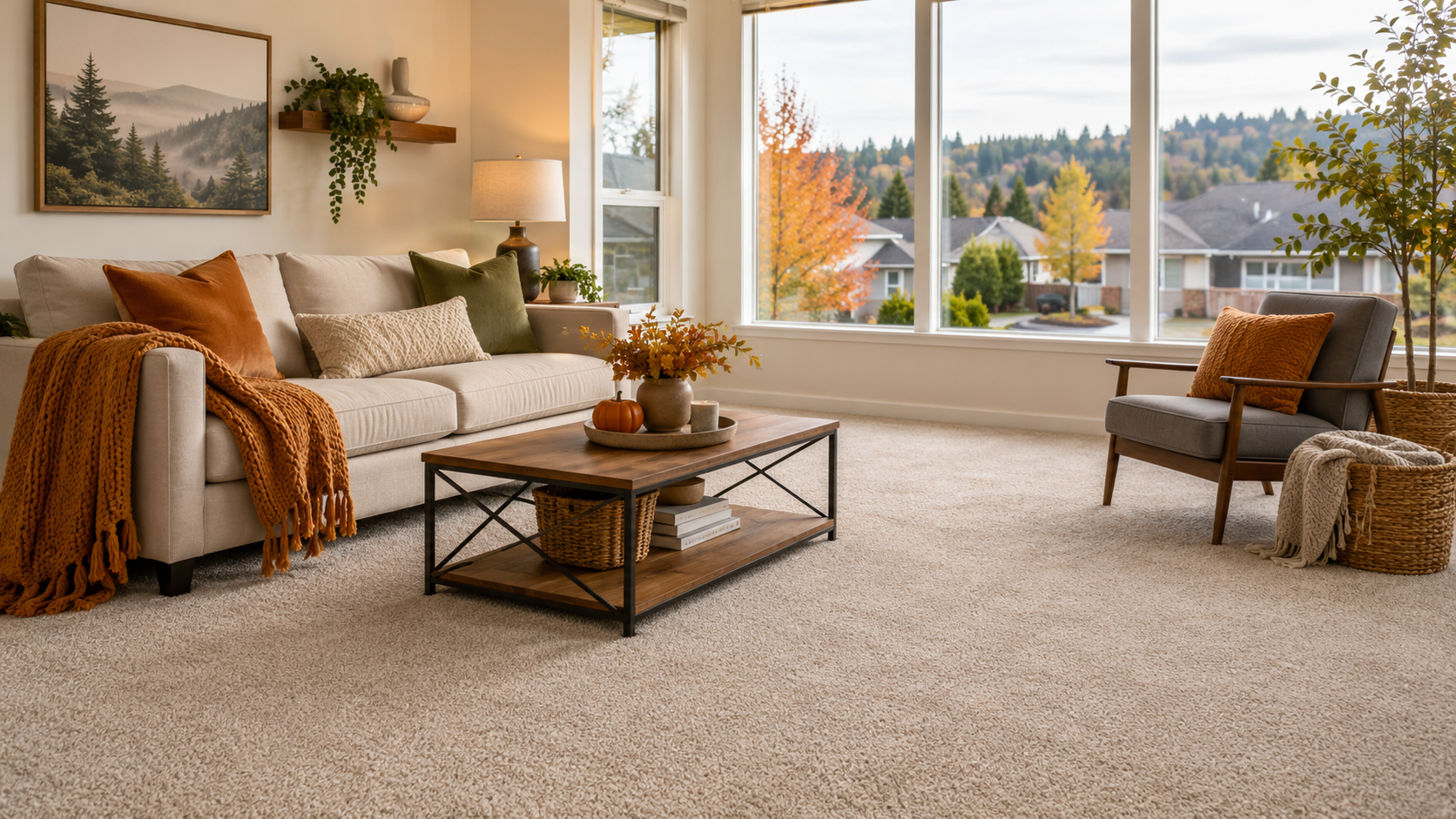
Why Carpet Makes Sense When You’ve Just Bought Your First Home
Buying your first home is exciting, but it also gives your budget plenty to do. Beyond the down payment and closing costs, there may be moving expenses, furniture, paint, repairs, appliances, and dozens of smaller purchases that become noticeable once you have the keys.
Oregon Housing and Community Services describes the down payment as one of the biggest barriers to homeownership and currently offers programs designed to help qualifying buyers with down payment and closing costs. That broader financial picture explains why many first-time homeowners need to prioritize renovation projects carefully after moving in.
Flooring can be one of the largest surfaces you update, so choosing a material that delivers comfort, style, and good value matters. Carpet remains worth considering for exactly that reason.
A current 2026 national cost guide from Angi lists typical carpet installation projects at roughly $790 to $2,900. For comparison, the same guide lists luxury vinyl plank projects at approximately $1,100 to $4,200 and hardwood at about $2,500 to $7,100. Those figures are broad national planning ranges rather than Beaverton-specific estimates, and actual costs depend on square footage, carpet quality, preparation, labor, and installation details. Still, they illustrate why carpet can provide a lower-entry-cost path to refreshing a home.
For buyers settling into Beaverton or West Portland, that flexibility can be valuable. You might want a more comfortable bedroom now without using the renovation budget you’re saving for a future kitchen or bathroom project.
With more than a century of experience serving the Portland area, Paulson's Floor Coverings helps homeowners compare flooring based on the room, household, design goals, and budget rather than treating every space the same.
Carpet won’t be the right material for every room. But when it’s used thoughtfully, it can help first-time buyers make a new home feel warmer, quieter, and more personal without taking on a larger flooring project than they’re ready for.
Carpet Can Keep the Initial Flooring Investment Manageable
Affordability isn’t simply about finding the lowest price tag. A useful flooring budget considers what you need to purchase, where you need to install it, and how much performance you’re getting for the money.
Carpet gives homeowners considerable control over those variables.
There’s a Wide Range of Carpet Options
Carpet comes in numerous fibers, constructions, pile styles, colors, and performance levels. That means first-time buyers aren’t locked into one price point.
You can prioritize a higher-performance carpet in a busy family room while choosing a simpler option for a lightly used guest bedroom. You can also compare cushion choices and installation requirements based on how each room will actually be used.
That flexibility makes it easier to allocate money where it has the greatest impact.
You Can Focus on the Rooms That Need It Most
A first home doesn’t have to be renovated all at once.
If the living room flooring is in good condition but the upstairs bedrooms are worn, update the bedrooms first. If one room needs to become a nursery, office, or comfortable guest room, start there.
This staged approach can keep the project aligned with your available budget instead of turning new flooring into a whole-house commitment.
Carpet Can Transform a Room Quickly
Flooring affects a large percentage of what you see when you enter a room. Replacing stained, worn, or dated carpet can therefore make a noticeable visual difference without changing cabinetry, trim, lighting, or furniture.
Choose a versatile neutral and the floor can create a fresh foundation for future updates. Paint colors and furnishings can evolve around it as your new home begins to feel more like your own.
For first-time buyers, that can be a practical way to make meaningful progress while leaving room in the budget for other priorities.
Choosing the Right Carpet Fiber Can Improve Value
Not every carpet performs the same way, so comparing fibers is more useful than choosing based on color alone.
The Carpet and Rug Institute identifies nylon, polyester, polypropylene, triexta, and wool among the primary carpet fibers used in the United States. Each offers different characteristics in areas such as durability, stain resistance, appearance retention, cleaning, and color.
Nylon for Busy Areas
Nylon is known for resilience and durability. Shaw describes it as versatile and strong in areas such as texture retention, soil resistance, and overall performance.
That can make nylon worth considering for:
Hallways
Stairs
Family rooms
High-use bedrooms
Homes with active households
The initial price may be higher than some other synthetic fibers, but looking at how the room will be used can help you decide whether the additional performance offers better value.
Polyester for Softness and Color
Polyester offers softness, strong color clarity, and natural resistance to staining and fading, according to Shaw. It may be a good fit when comfort and appearance rank highly and the room doesn’t demand the same resilience you might want from nylon in a heavily traveled area.
Bedrooms are an obvious place to consider it.
If you’re buying your first Beaverton home and want the primary bedroom to feel more finished without using a major share of the renovation budget, a well-selected polyester carpet may help you balance appearance and value.
Polypropylene for Specific Applications
Polypropylene, also known as olefin, offers natural stain and fade resistance. Shaw notes that it generally provides less resilience than nylon or polyester and is frequently used in loop-pile constructions.
The main lesson is simple: don't assume the highest-priced carpet is automatically the right one.
Match the fiber and construction to your room. A knowledgeable flooring professional can help you avoid paying for performance characteristics you don’t need while also preventing you from choosing an option that may not suit a high-traffic area.
Carpet Adds More Than a New Look to Beaverton Homes
The value of carpet becomes clearer when you consider what it changes about the experience of a room, not just its appearance.
A Softer Surface Underfoot
Carpet provides cushioning and warmth that hard flooring doesn't deliver in quite the same way. The Carpet and Rug Institute notes that carpet offers thermal resistance and retains warm air, while also creating a softer place to sit, play, walk, and work.
That can feel especially welcome during the cooler, wetter months around Beaverton.
Think about getting out of bed on a chilly morning. A carpeted bedroom immediately feels different from stepping onto a hard surface.
For families with young children, carpet can also create a comfortable surface for floor play. For anyone building a home office in a spare bedroom, it can soften both the physical and acoustic feel of the space.
Carpet Helps Quiet a Busy Home
Sound control is another useful benefit.
Carpet absorbs footfall and room noise, while carpet cushion can increase the sound-dampening effect. The Carpet and Rug Institute also notes that carpet can help reduce sound transmission between floors.
That makes it particularly useful in:
Upstairs bedrooms
Hallways
Stairs
Media rooms
Nurseries
Home offices
Multi-level homes
If you’ve moved from an apartment into your first house, you may be surprised by how much sound travels through open layouts, stairways, and upper floors. Flooring can help shape the acoustics without requiring additional decorative treatments.
When you’re comparing carpet flooring, consider comfort, traffic level, acoustics, and maintenance along with the upfront price. The best value usually comes from choosing a carpet that fits how you’ll actually use the room.
Smart Carpet Choices Can Help Your Budget Go Further
A value-focused flooring project isn't about selecting the same product for every room. It’s about making deliberate choices.
Prioritize High-Impact Spaces
Start with rooms where flooring affects comfort most.
Bedrooms are a natural candidate because carpet can change how warm and inviting they feel. A family room may also deserve priority if it’s where you spend most evenings.
By contrast, a bathroom or entryway usually calls for a flooring material designed for regular moisture exposure.
Giving each room the material it needs can prevent overspending in one area while making better use of your overall renovation budget.
Choose Colors With Flexibility
Your first-home decorating style may change after you've lived in the house for a year or two.
That makes adaptable carpet colors especially useful.
Warm beige, taupe, greige, soft brown, muted gray, and other versatile neutrals can work with numerous paint colors and furniture styles. A subtle texture can add visual interest without locking the room into a narrow design theme.
You can still choose color if that reflects your style. Just think about how likely you are to change walls, bedding, or furniture in the coming years.
Don’t Ignore Carpet Cushion
The carpet itself gets most of the attention, but the cushion underneath influences comfort and performance.
The Carpet and Rug Institute notes that choosing the correct cushion helps support the carpet and contributes to resilience, thermal insulation, acoustics, and comfort.
Rather than treating padding as an afterthought, discuss it as part of the flooring system.
A professional can help match the cushion to the carpet manufacturer's requirements and the way the room will be used.
Measure Before You Set the Budget
Flooring prices are usually tied closely to the amount of material and installation required, so accurate measurements matter.
Room dimensions alone may not tell the full story. Carpet width, seams, closets, stairs, transitions, and room shape can affect the amount of material needed.
A professional measure gives you a clearer project picture before you commit to a specific carpet.
Carpet Can Be a Practical Long-Term Choice When It’s Maintained Well
An affordable purchase only represents good value if the flooring continues to perform.
Carpet needs regular care, but the routine is straightforward.
Vacuum Consistently
Regular vacuuming removes soil and particles before they become embedded more deeply in the carpet.
The Carpet and Rug Institute also reports that carpet captures dust and particles rather than allowing them to remain loose on a hard surface. Its 2025 third-party air particulate testing found that carpet reduced repeated recirculation of particles into the breathing zone, with regular vacuuming allowing those captured particles to be removed.
That makes proper cleaning part of maintaining both appearance and performance.
Respond to Spills Promptly
A spill becomes easier to manage when you address it quickly and follow the manufacturer's care guidance.
Different carpet fibers and stain treatments can require different cleaning methods, so keep the warranty and maintenance information for the product you choose.
Match Durability to Traffic
This is where first-time buyers can avoid a common false economy.
A lower-priced carpet intended for light use might be perfectly suitable for a guest room that gets occasional traffic. The same carpet may deliver disappointing value on stairs used dozens of times every day.
Choosing performance based on the room can help the flooring maintain its appearance longer.
Think in Terms of Cost Per Useful Year
Instead of asking only, "What's the least I can spend today?" ask, "What will give me the right performance for this room?"
Sometimes the more affordable option is the lower-priced product. In another room, paying more for durability may make better financial sense over time.
There’s no universal answer, which is exactly why comparing products based on lifestyle matters.
Where Carpet Works Best in a First Beaverton Home
Carpet can offer excellent value, but it works best when used in the right locations.
Bedrooms
Bedrooms are among the easiest places to appreciate carpet.
The flooring adds softness, warmth, and sound absorption, while the generally lower traffic compared with hallways or living rooms can open the door to a wider range of carpet styles.
Upstairs Hallways and Stairs
These areas benefit from noise reduction but demand greater durability.
Look for carpet and cushion designed for regular traffic, and give particular attention to professional installation on stairs.
Family Rooms
A family room can be an excellent place for carpet if you want an inviting surface for relaxing, reading, playing, or watching television.
Households with pets or children may want to prioritize stain resistance and easy maintenance.
Home Offices
Carpet can help control sound from calls, footsteps, and equipment. It also gives a converted bedroom office a warmer feeling than many hard surfaces.
Where Another Material May Make More Sense
Carpet generally isn't the first choice for spaces that regularly deal with water.
Bathrooms, laundry rooms, and wet entry areas usually benefit from materials designed specifically for moisture exposure.
A kitchen may also call for a hard surface because spills and food preparation create different maintenance demands.
You don't need one flooring type throughout the entire house. Mixing materials by room can actually make a first-home flooring plan more practical.
Make Your First Flooring Update Work for Your Life and Budget
Your first home doesn't need to look finished on move-in day.
One of the advantages of ownership is being able to improve the space gradually. Flooring can follow that same approach.
Start with the areas that genuinely need attention. Decide whether your priority is comfort, durability, quiet, style, or a combination of those factors. Compare carpet fibers and constructions based on how much traffic each room receives rather than assuming every room needs the same product.
Then look at the complete project cost. Include carpet, cushion, preparation, transitions, stairs where applicable, and professional installation. Broad online price ranges can be helpful for early planning, but a local measure and product selection will give you a much more meaningful figure for your actual Beaverton home.
Most of all, don't confuse affordability with settling for a floor you don't like. Today's carpet comes in a wide range of colors, textures, patterns, fibers, and performance levels. The Carpet and Rug Institute emphasizes that this variety allows carpet to work as anything from a quiet neutral foundation to a stronger design feature.
For a first-time homeowner, that combination is compelling: you can refresh important rooms, improve comfort, reduce noise, and create a more personal home while keeping the flooring project aligned with your other financial priorities.
If you're deciding which carpet, cushion, and style make sense for your new Beaverton home, get in touch with the Paulson's team for knowledgeable, personalized help.


