

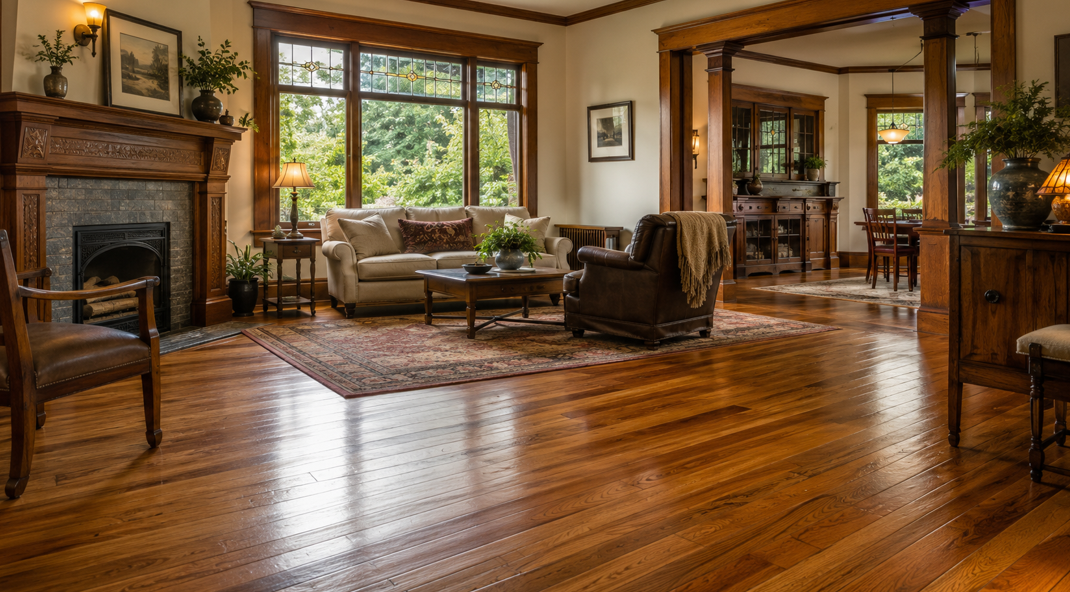
Historic Hardwood Deserves a Second Look
Walk into an older Vancouver home and the floor often tells part of the story. You may see soft wear along the hallway, faded areas near windows, scratches beneath dining chairs, or a finish that no longer reflects light evenly. Those signs can make a room feel tired, but they do not always mean the wood needs to be removed.
Refinishing gives many homeowners a chance to restore what is already there. Instead of covering original boards or replacing them immediately, a flooring professional can evaluate the surface, repair suitable areas, sand away the worn finish, and apply a new stain or protective coating. The result can be a cleaner, warmer floor that still feels connected to the home’s age and character.
Family-owned for more than 100 years, Paulson’s Floor Coverings helps homeowners throughout the Portland Metro and Vancouver area make confident flooring decisions. That local experience is useful when a project involves older materials, previous repairs, changing room layouts, or floors that may have been refinished before.
For owners of historic or character-rich homes, refinishing can support two goals at once. It can improve the floor for everyday living while preserving details that would be difficult to reproduce. Natural grain, board widths, transitions, borders, and subtle color variation all contribute to the atmosphere of an older property.
Not every hardwood floor is a good refinishing candidate. The boards need to be assessed for thickness, stability, moisture damage, previous sanding, and structural concerns. Once those factors are understood, homeowners can make a practical decision based on the condition of the floor, the style of the home, and the look they want to create.
Why Original Hardwood Suits Older Vancouver Homes
Hardwood covers a large visual area, so it strongly affects how a room feels. In an older home, the floor may connect architectural details that were designed to work together. Restoring it can help the interior feel balanced without making the space look disconnected from its original character.
It Connects the Home’s Wood Details
Many older homes include wood trim, stair parts, built-in cabinets, interior doors, fireplace surrounds, or traditional window casings. Original flooring often shares similar undertones or grain character, even when the species does not match exactly.
A refinished floor can help these elements feel related again. Removing a cloudy or worn surface may reveal warmer tones that complement nearby woodwork. The floor does not need to match every feature perfectly. A little contrast often looks more natural than forcing every wood surface into the same color.
Natural Variation Adds Personality
Real hardwood has variation. Some boards may be lighter, some darker, and others may show stronger grain patterns, knots, or mineral streaks. Those differences give the material depth.
Refinishing can bring that variation forward in a more polished way. It may soften surface scratches and dull traffic paths while allowing the wood’s character to remain visible. Homeowners can choose whether they want a more uniform stain or a finish that celebrates the differences between boards.
Existing Materials Create Continuity
When suitable original flooring remains in place, it can create continuity between rooms and generations of updates. The boards may have been installed to fit the home’s proportions, hallways, or adjoining spaces.
Keeping those materials can be especially meaningful when the floor includes narrow strips, decorative borders, distinctive thresholds, or other details that are uncommon today. Refinishing improves the surface without automatically losing those features.
Historic Charm Can Support Modern Living
Preserving character does not mean accepting a floor that is uncomfortable to live with. A professionally selected finish can make the surface easier to maintain and better suited to current routines. The goal is to respect what gives the property personality while making the floor clean, usable, and ready for daily life.
How Refinishing Brings Back the Floor’s Character
Refinishing can change the feel of a room because it affects color, texture, light, and visual flow. It does not make every board look new, and it should not erase every sign of age. A successful project improves the overall surface while keeping the qualities that make real wood appealing.
Revealing the Natural Grain
Old finish can become dull, cloudy, scratched, or uneven. Residue from unsuitable cleaners may also build up. When the surface is professionally sanded, the underlying grain can become more visible.
That renewed clarity often makes the floor look richer without requiring a dramatic color change. Straight grain, swirling patterns, and natural variation begin to stand out again, especially when the finish complements the wood species.
Refreshing Faded and Worn Areas
Sunlight, rugs, furniture placement, and foot traffic can cause areas to age differently. A hallway may look lighter than a protected corner, while space near a window may show a different tone from the middle of the room.
Refinishing can create a more consistent overall appearance. It may reduce contrast between faded and protected sections, although deep discoloration, pet stains, water marks, or oxidation may remain visible. A knowledgeable professional can explain what is likely to improve and what may still show.
Restoring Warmth and Visual Flow
A dull floor can break up a room visually. When the finish is renewed, light may reflect more evenly across the surface, helping the space feel cleaner and more connected.
This can be particularly effective in homes with adjoining living rooms, dining rooms, and hallways. A continuous hardwood surface can guide the eye through the home and highlight its proportions.
Keeping the Right Amount of Patina
Patina is the gentle visual character created by age and use. Some homeowners want a floor that looks fully refreshed. Others prefer to retain small marks, tonal differences, or evidence of the home’s history.
That preference should be discussed before refinishing begins. Sanding, stain color, repair methods, and sheen all influence how much age remains visible.
What refinishing may improve:
Surface scratches
Dull or worn finish
Light scuffing
Faded traffic paths
Minor color inconsistency
A sheen that no longer suits the room
Severe moisture damage, deep stains, loose boards, rot, or structural movement may require repairs or another flooring solution. Refinishing improves the surface, but it cannot correct every condition beneath it.
Refinish or Replace? How to Evaluate an Older Floor
A worn appearance does not always mean replacement is necessary. The key question is whether the damage is mostly on the surface or extends deeper into the flooring system.
Signs the Floor May Be Worth Refinishing
A floor may be suitable when:
The boards remain stable and securely attached
Most scratches and wear are limited to the finish
Enough usable wood remains above the tongue-and-groove joints
The layout and wood species contribute to the home’s character
Previous sanding has not removed too much material
Damaged boards are limited enough to repair selectively
Solid hardwood can often be refinished more than once, but the exact number depends on its thickness and previous work. Engineered hardwood may also be refinishable if the top wear layer is thick enough. That detail needs to be confirmed before sanding.
Conditions That May Limit Refinishing
Replacement or more extensive repair may be a better direction when the floor has:
Widespread water damage
Rot or significant deterioration
Severe cupping, crowning, or movement
Large areas of missing or broken boards
Structural or subfloor concerns
Too little material remaining for another sanding
These conditions do not automatically mean the entire floor must be replaced. Targeted repairs may preserve much of the original surface.
Why a Professional Assessment Matters
Appearance alone does not reveal everything. A flooring professional may need to identify whether the floor is solid or engineered, measure the remaining wear layer, inspect moisture concerns, review previous coatings, and evaluate repairs at edges or transitions.
A hardwood floor is generally a good refinishing candidate when the boards remain structurally sound and enough usable wood remains above the joints. A professional inspection is the most reliable way to confirm that.
Homeowners comparing restoration with replacement can explore available hardwood flooring styles, species, and finishes before choosing the right direction. Seeing current options can help clarify whether preserving the existing boards or creating a new look better supports the home.
Choosing a Color and Finish That Respects the Home
Refinishing is both a restoration project and a design decision. The selected color and sheen affect how the floor relates to trim, cabinets, wall colors, furnishings, and natural light.
Natural and Light-Toned Finishes
A natural or lightly toned finish can emphasize grain and keep the room feeling open. This approach often works well when the wood has attractive variation and the homeowner wants its original appearance to remain the focus.
Lighter finishes may also create a relaxed backdrop for traditional and modern furnishings. However, the final result depends on the wood species. A pale stain on one species may look completely different on another.
Medium and Warm Brown Tones
Medium brown stains can complement traditional trim, built-ins, and classic furniture without making the floor feel overly formal. Warm tones may help connect reddish, golden, or neutral wood details throughout the room.
Samples remain important because lighting and surrounding finishes can shift how a stain appears from morning to evening.
Deeper Stains
Darker stains can add contrast and create a more dramatic look. They may suit rooms with light walls, substantial trim, or a formal design direction.
Homeowners should also consider maintenance preferences. Dust, pet hair, and small surface marks may be more visible on some dark finishes.
Selecting the Right Sheen
Sheen affects both appearance and how everyday wear is perceived.
Matte finishes create a soft, understated look.
Satin finishes offer gentle reflection and suit relaxed living spaces.
Semi-gloss finishes provide more shine and a polished appearance.
Gloss finishes reflect the most light and can make marks more noticeable.
The floor does not need to match trim or cabinetry exactly. Coordinated undertones and thoughtful contrast often create a more natural interior. Testing samples on the actual floor is especially useful because board age, grain, previous treatments, and room lighting all influence the final color.
What to Expect During Hardwood Refinishing
Knowing the basic process can make planning easier. Exact steps and timing vary based on the floor’s condition, finish system, repairs, room size, and site conditions.
Inspection and Project Planning
The process usually begins with an assessment of the floor’s construction and condition. The flooring professional may look for loose boards, damaged sections, moisture concerns, previous coatings, and transitions between rooms.
This is also the time to discuss stain colors, sheen, repair expectations, access, furniture removal, and how the rooms will be used after each stage.
Preparing the Space
Furniture, rugs, and movable items generally need to be removed. Doors, vents, adjacent rooms, and fixed features may need protection.
Professional dust-management equipment can reduce airborne sanding dust, but the process is not completely dust-free. Clear preparation instructions help the work move smoothly.
Sanding the Existing Surface
Sanding removes the worn coating and a controlled amount of wood to create an even surface. Edges, corners, thresholds, and detailed areas may need separate tools or extra attention.
The sanding approach depends on the floor’s thickness, flatness, previous refinishing, and desired result. Aggressive sanding is not always suitable, especially when preserving older boards.
Repairs, Stain, and Finish
Loose or damaged boards may be repaired before the final coating is applied. Small gaps or imperfections may be addressed where suitable, but seasonal movement and natural variation can remain.
If stain is included, sample approval is important. Once the color is accepted, the protective finish is applied according to the product system and site conditions.
Drying and Curing
Drying and curing are different. A finish may feel dry enough for limited contact before it reaches its intended durability.
Homeowners should follow the professional’s instructions for foot traffic, furniture, rugs, pets, and cleaning. The correct timing depends on the finish used, so universal schedules can be misleading.
Planning a Summer Project
July can be a practical time for some Vancouver households to schedule refinishing, particularly when routines allow rooms to remain clear. Ventilation, indoor temperature, and humidity still need to align with product requirements.
A summer project works best when the household plans ahead for access, furniture storage, pets, and curing time rather than relying on the season alone.
Keeping Refinished Hardwood Beautiful
Once the work is complete, simple habits can help protect the renewed surface.
Protect High-Traffic Areas
Place walk-off mats near exterior doors to reduce grit and moisture. Use suitable rug pads beneath area rugs, and add protective pads under furniture legs.
Lift heavy furniture instead of dragging it. Keeping pet nails trimmed can also reduce surface scratches.
Clean With the Right Products
Use a cleaner approved for the specific hardwood finish. Excess water, steam cleaning, abrasive tools, and unapproved chemicals can dull or damage the coating.
Regular dust removal is helpful because fine grit can act like sandpaper under shoes. A soft broom, microfiber mop, or suitable vacuum attachment can keep the surface clean without harsh treatment.
Manage Sunlight and Color Change
Wood naturally changes color with light exposure. Rugs and furniture can create protected areas that age at a different rate from open sections.
Rotating rugs or adjusting furniture occasionally may support more even exposure when practical. Window treatments can also help manage strong direct sunlight.
Watch for Early Signs of Wear
Pay attention to:
Areas where the sheen begins to disappear
Fine scratches in traffic paths
New movement or sounds from individual boards
Changes near exterior doors, kitchens, or plumbing fixtures
Finish damage around pet bowls or planters
Early guidance may allow for targeted maintenance before the surface becomes heavily worn.
Preserve the Character With Trusted Local Guidance
Older hardwood does not always need to be replaced simply because it shows age. When the boards are suitable, refinishing can reveal natural grain, restore warmth, improve visual flow, and help original details feel connected again.
The best result balances preservation with daily practicality. That means choosing a stain and finish that suit the wood, understanding which imperfections may remain, planning carefully for the work, and following the right maintenance routine afterward.
Paulson’s Floor Coverings can help Vancouver homeowners evaluate existing hardwood, consider repair and finish options, and decide whether refinishing aligns with the property and their design goals. Ready to find out whether your floors can be restored? Get in touch with our knowledgeable flooring team for personalized guidance.


